The Vital Role of Estrogen & Testosterone Replacement Therapy in Perimenopause and Menopause
- Catherine Brigger
- Oct 28, 2025
- 5 min read


Introduction
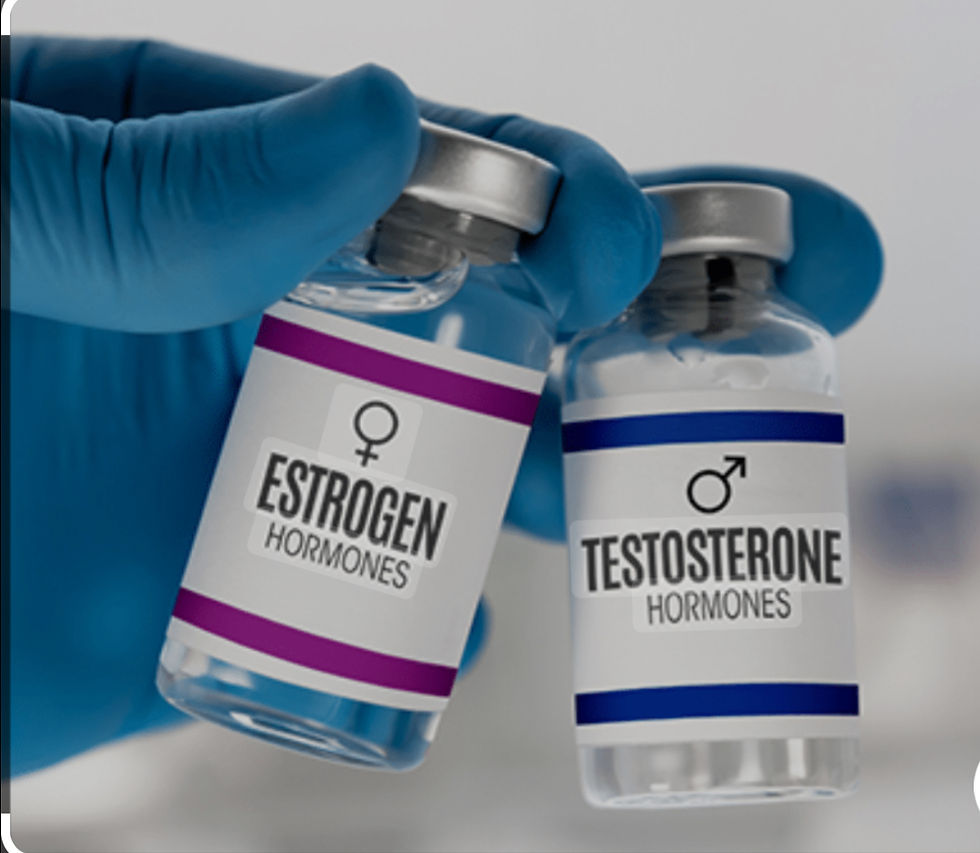
Navigating perimenopause and menopause can feel like a roller-coaster of symptoms, changes, and uncertainty. At TRUE Rejuvenation, our mission is to help women move from simply coping to truly thriving. That’s why understanding the importance of estrogen replacement therapy and testosterone replacement therapy during these phases is so crucial. When done appropriately, hormone therapy is not about reversing aging—it’s about restoring balance, vitality, and confidence.
What Happens During the Hormonal Transition?
During perimenopause and menopause, a woman’s body undergoes dramatic hormonal shifts. Estrogen levels decline, often rapidly, leading to both symptomatic changes (think hot flashes, mood swings, brain fog) and long-term health consequences (such as bone loss and cardiovascular risk). At the same time, testosterone levels also decline in women, though it is often less discussed. These hormonal changes affect multiple systems: musculoskeletal, cardiovascular, cognitive, sexual, and emotional.
Why Estrogen Matters: The Master Hormone
Estrogen is involved in hundreds of processes—so when levels drop, the impact is wide.Some of the core functions of estrogen include:
Supporting bone density and reducing risk of osteoporosis.
Maintaining healthy cardiovascular function and vascular tone.
Supporting cognitive function, mood stability, and sleep quality.
Keeping the genitourinary tissues healthy—vaginal lining, urinary tract, etc.
Loss of estrogen often manifests as hot flashes, night sweats, vaginal dryness, sleep disruption, brain fog, irritability, and changes in metabolism (weight gain around the middle, lowered energy). According to the Mayo Clinic, menopause hormone therapy (MHT) is taken to replace the estrogen the body stops making and is used to relieve symptoms such as hot flashes and prevent bone loss. Mayo Clinic
Importantly, research suggests timing matters. A recent article from The Menopause Society highlights that estrogen therapy initiated earlier in the menopause transition may carry lower risk and greater benefit. The Menopause Society
Testosterone: The Under-Recognized Hormone for Women
While estrogen tends to receive the spotlight, testosterone plays a vital but often overlooked role in women’s health—especially during the menopause transition. Women produce testosterone (though in smaller amounts than men), and the decline in androgen levels contributes to symptoms like low libido, fatigue, reduced muscle tone, mood shifts, and diminished motivation.
Multiple sources emphasize that testosterone therapy in women is gaining attention. A systematic review in The Lancetfound that testosterone is effective for postmenopausal women with low sexual desire (when administered via non-oral routes) and may have a neutral lipid profile. The Lancet Guidelines caution, however, that long-term safety and efficacy in other domains (beyond sexual desire) require more research. OUP Academic+1
Thus, in a precision-based integrative medicine approach—such as ours at TRUE Rejuvenation—testosterone is considered thoughtfully in combination with estrogen, when appropriate and guided by symptoms and labs.
The Synergy of Estrogen + Testosterone Replacement
Estrogen and testosterone don’t work in silos—they collaborate. Estrogen supports many of testosterone’s beneficial effects (for example in muscle tissue and brain function), while testosterone can enhance the effects of estrogen via aromatization (conversion into estrogen) and by supporting lean muscle, metabolism, and vitality.
When both hormones are addressed in a tailored hormone replacement therapy plan:
Libido, intimacy, and sexual health often improve.
Muscle mass and body composition may shift in a more favorable direction.
Mood, motivation, cognition, and energy levels may return toward baseline.
Healthspan (not just lifespan) may improve—supporting bones, heart, metabolism, and brain.
Why “Normal” May Not Be “Optimal”
A major challenge is that many women are told their hormone labs are “normal,” yet they still feel poorly. That’s because standard lab reference ranges often reflect broad populations (many of whom are symptomatic) rather than “optimal functional” ranges. At TRUE Rejuvenation, we emphasize individualized assessment: symptoms, lab data, whole-body health, and long-term goals. Hormone replacement should be customized—not one-size-fits-all.
Safety, Timing and Evidence: What the Research Says
Hormone therapy is more nuanced than simply “take this hormone and you’re fixed.” A number of important research and safety considerations include:
The “timing hypothesis” in menopause suggests that initiating hormone therapy closer to menopause (within the so-called “therapeutic window”) is safer and more beneficial, versus starting many years after menopause. Wikipedia+1
For estrogen replacement, multiple studies underscore its benefit in symptom relief and prevention of bone loss when used appropriately. Mayo Clinic
For testosterone in women, though there is growing data supporting its use in hypoactive sexual desire disorder (HSDD), long-term cardiometabolic, breast, and cognitive safety remains under investigation. ImSociety+1
Research from Vanderbilt and others indicate that hormone therapy can be safe when method, patient age, time since menopause, and cardiovascular risk are taken into account. VUMC News
Integrative Approach: How TRUE Rejuvenation Does It
At TRUE Rejuvenation, our “precision-based integrative medicine” ethos means:
Comprehensive lab testing (including estradiol, testosterone, SHBG, DHEA, etc) plus symptom review and health history.
Personalized hormone replacement plans: choosing bioidentical hormones when indicated, selecting the correct delivery method (transdermal, pellet, etc), and balancing doses.
Monitoring and adjustment: Regular follow-up labs, symptom tracking, safety surveillance for bone density, cardiovascular markers, and more.
Lifestyle integration: Hormone therapy is powerful—but it works even better alongside nutrition, movement, sleep, stress management, and support for gut/endo/metabolic health.
Patient-education and empowerment: We believe that every woman deserves to understand her hormones, make informed decisions, and feel supported through the transition.
Common Myths & Realities
Myth: “I’m just too old for hormone therapy.”Reality: Age matters less than timing, individual risk/benefit, and route of delivery. Some evidence supports safe hormone therapy when started soon after menopause. The Menopause Society
Myth: “Testosterone is only for men.”Reality: Women produce testosterone—and evidence supports its use (in selected cases) for postmenopausal women with symptoms like low libido. The Lancet+1
Myth: “Normal lab results mean I’m fine.”Reality: Many women feel poorly despite labs in the “normal” range. Optimal ranges may differ from population averages.
Myth: “Hormone therapy is the answer to everything.”Reality: It’s a key tool—but it’s most effective when part of a holistic health strategy (nutrition, exercise, sleep, stress, gut health, etc).
Who Should Consider Hormone Replacement?
Women in perimenopause or menopause who are experiencing:
Hot flashes, night sweats, sleep disruption
Vaginal dryness, painful intercourse, urinary changes
Brain fog, memory issues, difficulty concentrating
Low libido, reduced sexual satisfaction
Significant fatigue, loss of muscle tone, increased body fat
Emotional symptoms—irritability, anxiety, low mood
Signs of bone loss (osteopenia/osteoporosis) or increased cardiovascular/metabolic risk
It’s essential to undergo a thorough evaluation with a qualified provider experienced in hormone therapy. Hormone replacement is not appropriate for everyone—individual risk factors (breast cancer history, cardiovascular disease, liver disease, etc) must be assessed.
Conclusion
Perimenopause and menopause mark a pivotal transition—not the end of vitality, but the beginning of a new chapter. Hormone replacement therapy with estrogen and testosterone (when guided expertly) can be transformative: restoring not just symptom relief but quality of life, healthspan, and confidence. At TRUE Rejuvenation, we champion an approach that is scientific, precise, individualized, and grounded in integrative wellness.
If you’re navigating this transition and not feeling like yourself, you don’t have to accept “just getting older” as your only story. You deserve to feel energized, clear-headed, resilient, and vibrant. Let’s walk this journey together.
Precision-based integrative medicine. Rooted in science. Designed for you.🖤 TRUE Rejuvenation Hormone Therapy – helping women thrive through every phase of life.
References
Iyer T, Manson JE. “Menopausal Hormone Therapy Use Among Postmenopausal Women (1999–2020)”. JAMA Health Forum. 2024. JAMA Network
Davis SR, et al. “Safety and efficacy of testosterone for women: a systematic review and meta-analysis.” The Lancet – Diabetes & Endocrinology. 2019. The Lancet
Mauvais-Jarvis F. “Testosterone Therapy and Metabolic Health in Menopausal Women.” In Principles of Precision Hormone Therapy. 2025. SpringerLink
Faubion SS, et al. “When Women Initiate Estrogen Therapy Matters.” The Menopause Society Press Room. 2025. The Menopause Society
Mayo Clinic. “Menopause hormone therapy: Is it right for you?” 2025. Mayo Clinic
Global Consensus Statement on Testosterone Therapy in Women. Journal of Clinical Endocrinology & Metabolism. 2020.


Comments